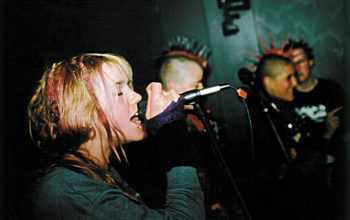
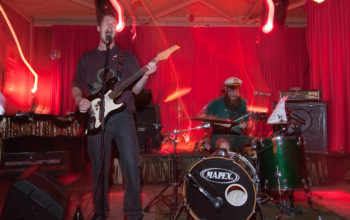
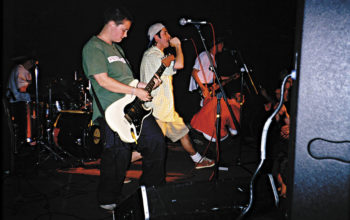
Harry Death was a chaotic, punk/ alternative rock band from Palmerston North, New Zealand, active from 1985 to 1992. Drawing inspiration from post-punk pioneers such as The Fall, Pere Ubu, Joy Division, and The Pop Group, their sound was often described as a discordant, abrasive mess, raw, noisy, and unpolished. One memorable description painted them as: “Picture a bunch of semi-rural hicks, individually playing different songs, behind what appeared to be a large shrieking Crunchie bar with a huge mullet, beige flares and wellington boots. Palmy chic indeed. No-one cleared a venue like Harry Death.” (The Small Takeover, 2009, April 20)
The band’s core consisted of Phillip Caswell (lead singer, guitarist, and primary songwriter) and Gerard Kelly, supported by a revolving lineup of musicians pulled from Palmerston North’s underground alternative scene. Members over the years included figures such as Laurence Driscoll, Jeremy Hicks, Michael Kelly, Paul Woods, Tim Scott, and others. Caswell, who also advocated for the unemployed and workers’ rights, infused the band’s lyrics with sharp commentary on the social fallout from New Zealand’s neoliberal reforms under the 1984–1990 Fourth Labour Government.
One of their notable tracks, “Maintained A Silence“, referenced the 1982 death of anarchist Neil Roberts, who detonated a bomb outside the Whanganui Computer Centre in protest against state surveillance and authority.
Harry Death built strong ties to the Wellington music scene, performing alongside bands like Compos Mentis, One Less Customer, and Flesh D-Vice, and recording in the capital on multiple occasions.
Their discography includes:
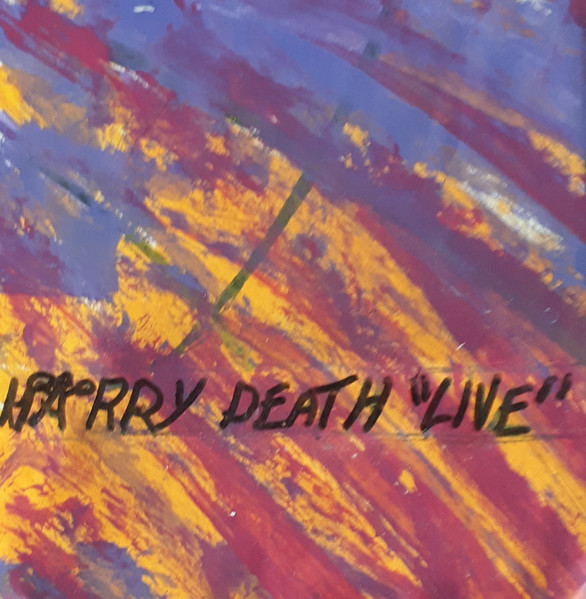
- Live (1986) – their debut, a limited cassette release capturing their raw energy in concert.
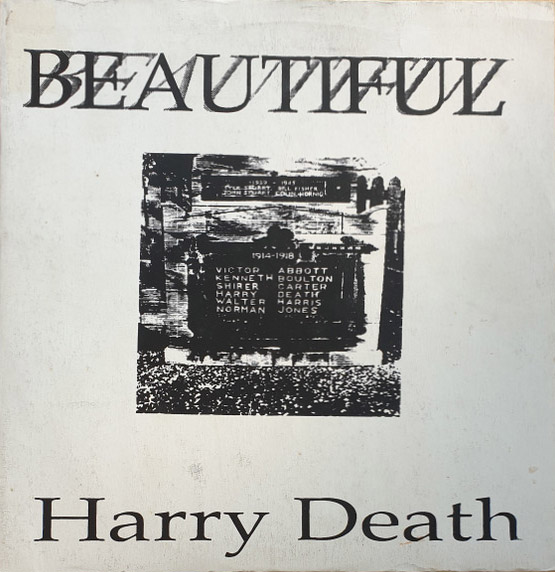
- Beautiful (1989) — a lathe-cut LP released through the New Plymouth independent label Ima Hitt (catalog HITT ME 6X), featuring tracks such as “Gordonmania,” “Arnold Splendour,” “New Song,” “Pop Song,” “Blue,” “Harry Death,” “Human Animal,” and “Let Me Out Of Here.” That same year, they contributed to the Ima Hitt compilation Celebrate The Sonic Arts.
- Live Too released in 1992 via Burning Records/ Sonic Arts Society) – a posthumous collection blending archival material from the original 1985 lineup (including “Johnny Appleseed” and “Davey Boy”) with newer 1992 Wellington recordings.
In 1987, three members briefly split off to join Claire Pannell in forming Katerpillar Tractor Concept, though Harry Death continued in various forms until their dissolution around 1991.
| Origin | Palmerston North |
| Genre | alt rock, punk |
| Years Active | 1985 – 1992. |
| Labels | Ima Hitt, Burning Records |
| Associated Acts | Katerpillar Tractor Concept |
| Past Members | Phillip Caswell/ Phillip Casual (lead vocals, guitar 1985-1992) Gerard Kelly (guitar, vocals 1985-1992) Tim Scott (vocals 1992) Nick Lawson (vocals) Greg Malcolm (lead guitar 1985 – ) Michael Satchell (guitar 1989) Roadie (guitar 1992) Paul Woods/ Guy (drums, organ, vocals 1985 – 1989) Laurence/ Larry Driscoll (drums, vocals 1992) Tim Abbot (bass 1985) Michael Kelly/ Telecom Mike (bass 1985-1992) Jeremy Hicks (bass 1989) Judy Eliassen (xylophone 1985) Anthony Davison (trumpet 1989) Frances Krsinich (saxophone 1989) |
Links
Releases
| Title | Date | Label | Type | Format |
|---|---|---|---|---|
| Live | 1986 | tape | ||
| Beautiful | 1989 | Ima Hitt | 7″ lathe | |
| Celebrate The Sonic Arts | 1989 | Ima Hitt | compilation | 12″ |
| Live Too | 1992 | Burning Records | CD | |
| Six Year Retrospective | 1992 | compilation | tape |
Timeline
1986, Live
1986, December 5, Railway Hall

1987
1987, February 25/ 26, The Cricketers Arms

1988
1988, July, Cricketers Arms
with Flesh D-Vice.
1989
1989, Beautiful
1990
1990, October, The Stomach
Recording live.
1990, December 17, Empire Warehouse
Big Mac recorded at Empire Warehouse.
1991
1991, February, Paisley Park
1992
1992, Live Too